You've seen it happen at the hardware store: two strings of lights, both labeled "white," side by side in the package — yet when you get home and hang them on the eaves, one bathes your home in a honey-gold warmth and the other cuts through the Florida night like stadium lighting. The difference isn't a defect. It's physics. And once you understand it, you'll never accidentally mismatch your holiday lighting again.
At Holiday Lights Decor Florida, we've been designing and installing professional holiday lighting displays across the Sunshine State since 2006. One of the most common questions we hear from homeowners and commercial clients alike is simple: What's the difference between warm white and cool white? The answer involves a little color science, a little home design theory, and quite a bit of Florida-specific knowledge about how light behaves in our uniquely bright, humid environment.
What Is Color Temperature? Understanding the Kelvin Scale
Color temperature is measured in Kelvins (K) — a unit borrowed from physics that describes the hue of light emitted by a glowing object at a given temperature. Despite the name, higher Kelvin numbers actually produce cooler-looking, bluer light, while lower Kelvin numbers produce warmer, more amber-toned light. It seems counterintuitive at first, but think of it like a metal rod heated in a forge: it glows red-orange at lower temperatures and shifts toward white-blue as it gets hotter.
For holiday lighting, the two most common color temperature categories are:
- Warm White (2700K–3000K): A soft, golden-amber glow reminiscent of traditional incandescent bulbs, candlelight, and firelight. This is the classic holiday look most people picture when they imagine a decorated home at Christmastime.
- Cool White (5500K–6500K): A crisp, bright, bluish-white light with a clean, contemporary appearance. This range mimics natural daylight and gives off an icy, modern aesthetic that suits sleek architectural styles.
When our installation teams spec out a project — whether we're dressing up a residential roofline with C9 bulbs or wrapping a commercial property's trees in Mini Lights — the Kelvin rating is one of the first decisions we help clients make. It's that foundational to the final look.
To explore our full range of lighting options, visit our products page for a closer look at the warm white and cool white bulbs and string lights we carry.
How 2700K Warm White vs. 6000K Cool White Actually Looks Outdoors
Color temperature readings in a spec sheet are one thing. How they register on your retinas when you're standing in your driveway at 8 PM is another. Let's break down what you'll actually see.
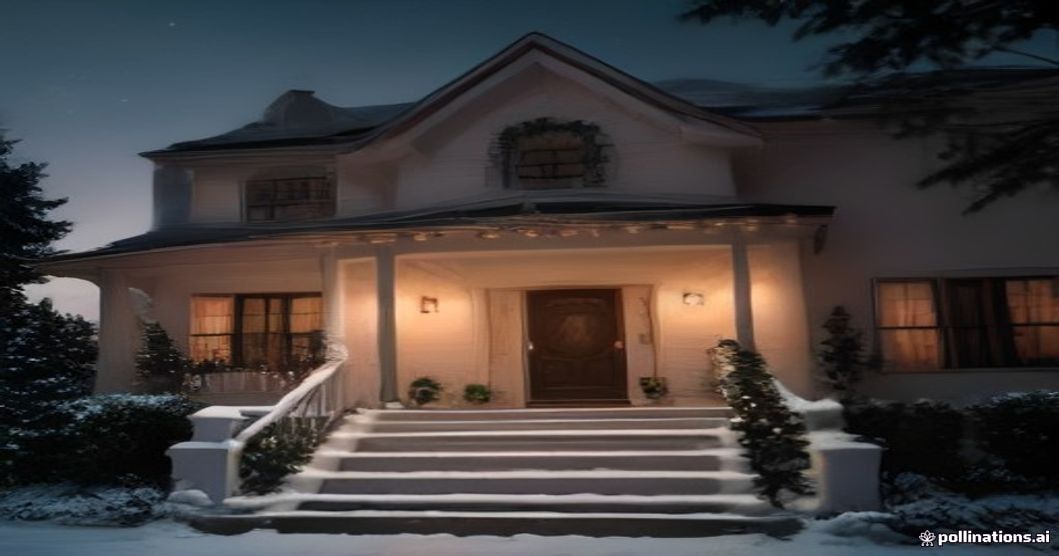
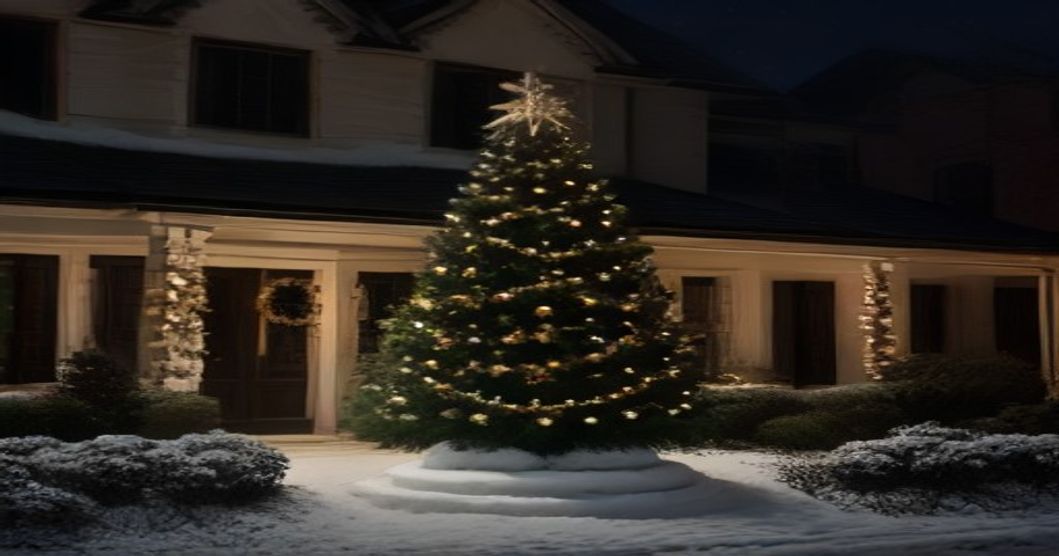
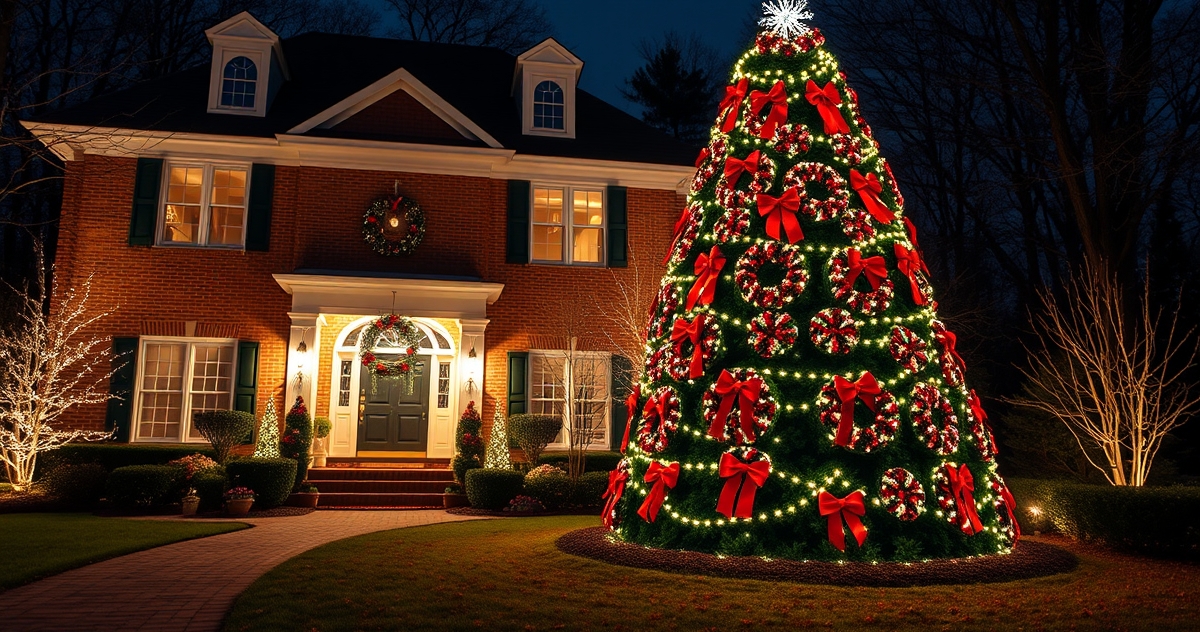
Warm White at 2700K casts a soft, amber-tinged glow that makes surfaces look rich and dimensional. Brick, stucco, wood siding, and natural stone all absorb and reflect this warmth beautifully, giving them a luminous, almost painterly quality. Garlands, Wreaths, and Bows look lush and inviting under warm white light. Greenery appears deeper and more saturated. When strung along a roofline with large-format C9 bulbs, warm white light at 2700K creates visible, distinct points of glowing amber — the quintessential holiday silhouette.
Cool White at 6000K, on the other hand, reads as nearly pure white with a subtle blue undertone. In outdoor environments, this color temperature creates high contrast and sharp visibility. Architectural lines appear more defined. Modern materials like smooth stucco, concrete, glass, and metal are flattered by cool white's precision. When used with Mini Lights densely layered through palm trees or architectural hedges, cool white at 6000K creates a striking, sophisticated effect that reads as current and elevated rather than traditionally festive.
One important note: these two color temperatures should never be mixed on the same display. Even a single strand of 2700K warm white lights mixed into a cool white installation will look immediately wrong — the color difference is jarring and undermines the cohesion of the entire design.
Why Warm White Dominates Traditional Holiday Aesthetics
There's a reason warm white has been the default holiday lighting color for over a century. The original electric Christmas lights were incandescent, which by nature emit light in the 2400K–2700K range — that warm, glowing amber we now associate with nostalgia, comfort, and the holidays. When LED technology emerged and began replacing incandescent bulbs, lighting manufacturers worked hard to replicate that exact warm tone, knowing it carried powerful emotional associations.
For Florida homeowners with traditional architecture — Mediterranean Revival, Key West Cottage, Spanish Colonial, Classic Ranch — warm white is almost always the right call. It complements earthy exterior paint palettes (creams, tans, terracottas, sage greens) and works beautifully with natural landscaping materials like clay tile roofs, wood pergolas, and brick driveways. Warm white C9 bulbs along a roofline with warm white Mini Lights wrapped through queen palms and sea grape trees creates a layered, cohesive display with real visual depth.
Warm white also photographs and videos exceptionally well, which matters more than ever in the age of social media. The soft glow reads as cinematic on a smartphone camera, creating the dreamy bokeh effect that makes holiday photos so shareable. Check out some of our past warm white installations in our gallery to see how this color temperature performs across different Florida home styles.
For homeowners ready to transform their property with a professionally designed warm white display, our residential installation services cover everything from initial design consultation through full installation and takedown.
When Cool White Makes the Statement: Modern Homes and Commercial Properties
Cool white has earned its own devoted following, particularly among homeowners with modern or contemporary architecture and commercial clients who want their properties to stand apart from the traditional holiday crowd. In Florida, this means new-construction homes with clean lines and flat or low-slope roofs, high-rise condominiums, boutique hotels, retail centers, and corporate campuses.
Cool white at the 5500K–6500K range has a precision that reads as intentional and sophisticated. When used with Mini Lights on a commercial property, cool white creates an almost jewel-like effect — clean, bright, and completely modern. For property managers and business owners looking to make a strong visual impression during the holiday season, cool white lighting signals design awareness rather than default festivity.
Cool white also pairs naturally with other non-traditional holiday accent colors. Silver, blue, and white color schemes — increasingly popular in Florida's coastal communities — are anchored by cool white lighting. Wreaths and Bows in silver and icy blue tones look cohesive and intentional under cool white light in a way they simply don't under warm white.
Our commercial clients across Florida have found that a well-executed cool white installation elevates their brand presentation during the holiday season. Learn more about how we approach large-scale holiday displays on our commercial services page.
The Florida Factor: How Sunshine State Conditions Affect Light Color Perception
Here's something that doesn't come up in most lighting guides written for northern climates: Florida's environment has a measurable effect on how light color reads at night. Several factors are at play.
Ambient light competition: Florida's warm climate keeps people outdoors year-round, meaning our streets, commercial corridors, and neighborhoods tend to have more active outdoor lighting — streetlamps, decorative bollards, restaurant and retail signage — than many other parts of the country. In this environment, cool white lights at 6000K can sometimes read as harsh or overly intense because they're competing with existing bright white light sources. Warm white's amber undertone provides enough color differentiation to stand out beautifully rather than blend into the ambient white noise of urban and suburban lighting.
Humidity and atmospheric diffusion: Florida's famously humid air acts as a natural diffuser for outdoor light. Water vapor in the atmosphere softens and scatters light, which tends to slightly mellow the harshness of cool white and add a dreamy halo effect to warm white. On humid December evenings — which is most of them in Florida — warm white C9 bulbs along a roofline take on an almost magical quality, their glow visibly softened and expanded by the moisture in the air.
Landscape and vegetation: Florida's lush, year-round greenery provides a dramatically different backdrop than the bare trees and snow of northern climates. Tropical foliage — palm fronds, bougainvillea, bird of paradise — interacts with light color in interesting ways. Warm white light enriches the deep greens and makes tropical plants look lush and vibrant. Cool white, with its bluer cast, can sometimes make Florida's warm-toned foliage look slightly washed out. This is why our installation designers often recommend warm white Mini Lights for landscape-integrated displays — it flatters Florida's natural environment in a way cool white simply can't match.
For more tips on making the most of Florida's unique landscape in your holiday display, see our guide on bush and shrub lighting for Florida landscaping.
Choosing the Right Color Temperature for Your Florida Property
So how do you decide? Here's a simple framework our designers use when working with new clients:
- Traditional architecture + natural materials + classic holiday aesthetic = Warm White (2700K–3000K)
- Modern or contemporary architecture + clean lines + sophisticated palette = Cool White (5500K–6500K)
- Commercial property seeking high visibility and brand elevation = Cool White
- Residential property prioritizing warmth, nostalgia, and photogenic results = Warm White
- Coastal home with blue and silver accent colors = Cool White
- Mediterranean, Spanish, or Craftsman-style home with earth-tone exterior = Warm White
And if you're ever unsure, warm white is almost always the safer choice in Florida's environment. It has a broad aesthetic appeal, performs beautifully against our year-round greenery, and creates the kind of holiday atmosphere that residents and visitors respond to instinctively.
For a deep dive into C9 bulb options in both warm white and cool white, our C9 bulbs complete buyer's guide for Florida homeowners walks through everything you need to know before making a selection.
Color temperature is one of many design decisions that goes into a truly outstanding holiday lighting display — but it may be the single most impactful one. Get it right, and every other element of your display falls into place. Get it wrong, and even the most expensive, perfectly installed lights can feel off in a way that's hard to explain but impossible to ignore.
At Holiday Lights Decor Florida, our professional installation teams have the experience and the eye to help you choose exactly the right color temperature for your property — and then execute a display that makes it sing. Whether you're decorating a single-family home, a commercial retail center, or a full municipal streetscape, we bring the same attention to detail to every project. Call us at (908) 336-2625 or request a free quote today to start planning your perfect Florida holiday lighting display.