Key Takeaways
- Professional roofline lighting starts with a precise linear measurement of every eave, rake, and ridge — Florida hip roofs often add 30–50% more footage than homeowners expect.
- C9 bulbs spaced 12 inches apart deliver the bold, visible glow that reads well against Florida's sun-bleached exteriors, while mini lights work best for layered or dimensional rooflines.
- Warm white (2700K–3000K) complements Florida's terracotta, stucco, and Coastal-palette homes; cool white (5000K–6000K) pops against modern white or grey facades.
- UV-resistant cords, outdoor-rated clips, and GFCI-protected circuits are non-negotiable in Florida's high-humidity, high-UV, afternoon-storm environment.
- Booking installation in June or July locks in availability and avoids the October–November rush that limits crew scheduling across the state.
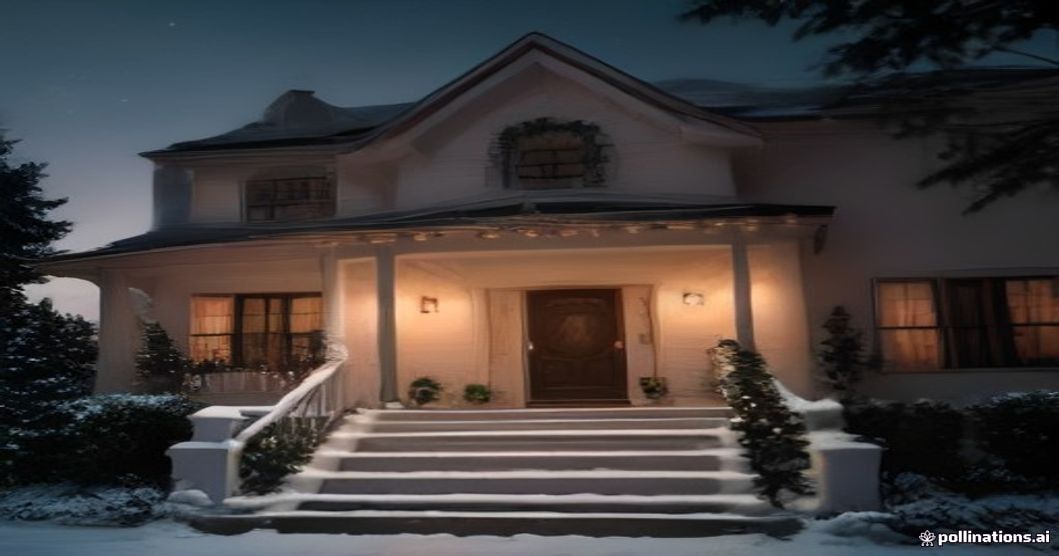
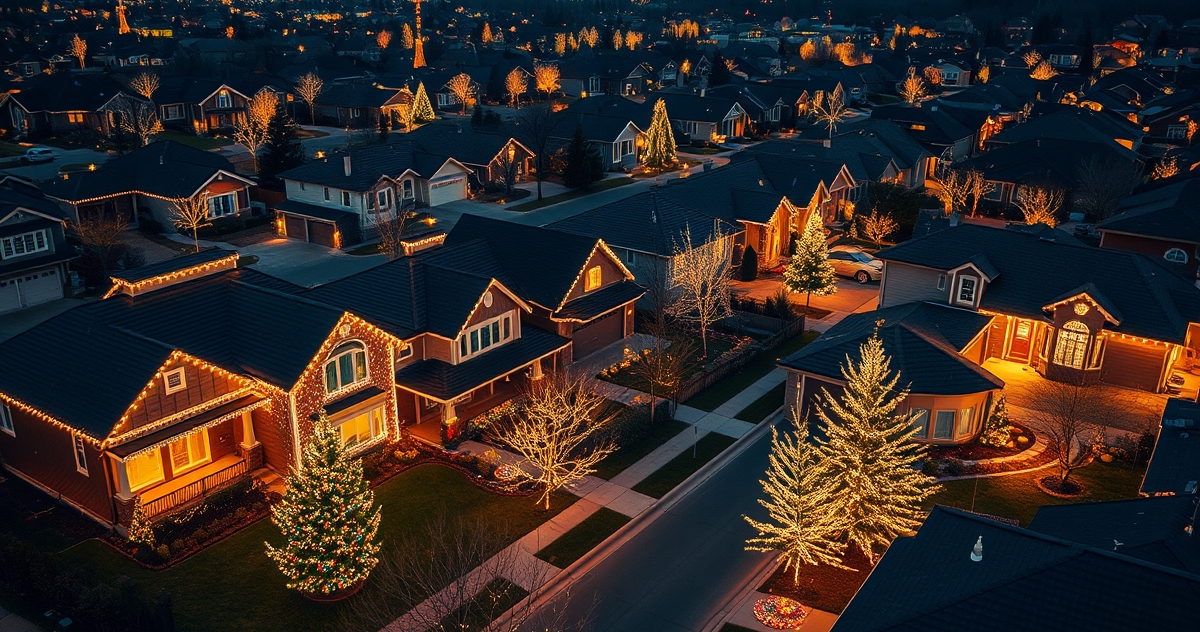
Picture the most photographed block in your Florida neighborhood during the holidays: rooflines glowing in perfectly spaced, unbroken lines of warm white or cool white light, every hip and gable traced as cleanly as an architectural drawing. That result doesn't happen by accident. It's the product of deliberate measurement, the right hardware for Florida's coastal climate, and installation techniques that keep everything looking sharp from Thanksgiving through New Year's — through humidity, afternoon downpours, and relentless UV exposure. Whether you're planning your home's first professional display or upgrading a DIY job that never quite sat right, this guide walks you through exactly how it's done.
Understanding Florida Roof Types and Why They Change Everything
Florida's dominant roof styles — hip, gable, flat, and variations like cross-hip and Dutch gable — each require a distinct approach to roofline lighting. Before a single clip goes up, professionals walk the property and sketch a lighting plan that accounts for every linear foot of illuminated edge.
Hip Roofs: Florida's Most Common Challenge
Hip roofs slope inward on all four sides, meaning there are no vertical gable ends — just continuous angled eaves that meet at a ridge. This is the most common roof style in Florida subdivisions, and it's where homeowners most often underestimate footage. A modest 2,000-square-foot home with a hip roof can require 180–240 linear feet of C9 strand just for the eave perimeter, plus additional footage if the rakes (the sloped edges) are also lit. Professionals measure each eave run individually, add 10% for clips and connector slack, and specify strand lengths accordingly. Running a continuous strand around a hip roof without pre-planning means you'll either run short or have unsightly excess bunched at a corner.
Gable Roofs: Straightforward but Steep
Gable roofs are simpler to measure — two long eave runs and two triangular gable ends — but the steep pitches common in Florida's older Craftsman and Colonial homes (8:12 to 10:12 pitch) make ladder work genuinely dangerous without the right equipment. Professional crews use articulating ladders and, on two-story homes, pneumatic lifts to reach peaks safely. A 12:12 pitch effectively doubles the vertical height risk compared to a low-pitch roof.
Flat and Low-Slope Roofs
Flat roofs — common on mid-century modern homes and commercial-adjacent residential properties — don't offer eave overhangs in the traditional sense. Here, professionals clip lights along the fascia board (the vertical face beneath the roof edge) using adhesive-backed or screw-mounted clips rated for Florida's wind load. The effect is a clean, linear ground-level glow that suits modern architecture beautifully. For commercial properties with flat rooflines, this technique is especially popular for storefronts and office buildings.
Measuring and Planning Like a Professional
Accurate measurement is the single step that separates a polished roofline from a patchy, uneven one. Professionals use a three-step planning process before ordering any product.
- Walk the perimeter with a measuring wheel or laser measure. Record each individual run — front eave, left eave, right eave, rear eave — separately. Do not assume symmetry; many Florida homes have bump-outs, garage wings, or covered entryways that add unexpected footage.
- Decide which edges to illuminate. Full perimeter (all eaves + all rakes) creates a dramatic floating-outline effect. Eave-only lighting is cleaner and more cost-effective. Ridge lighting is a premium upgrade that requires ridge clips and a separate circuit.
- Calculate bulb quantity. For C9 bulbs at 12-inch spacing, one bulb per linear foot. For a 200-foot perimeter, that's 200 C9 bulbs plus at least 200 clips. For mini lights (typically sold in 100-count strands covering 33 feet), divide total footage by 33 to get strand count, then add one strand as buffer.
A comparison of the two primary roofline light types helps clarify which product is right for which application:
| Feature | C9 Bulbs (12" spacing) | Mini Lights (dense strand) |
|---|---|---|
| Best for | Classic bold roofline outlines | Layered or decorative fascia accents |
| Visibility from street | Excellent — readable at 200+ ft | Good at close range; softer at distance |
| Bulb style | Large faceted or smooth globe | Small T5 or M5 lens |
| Watts per 100 ft (LED) | ~24W LED | ~4–7W LED |
| Florida UV durability | High (commercial-grade cord) | Moderate (depends on cord rating) |
| Typical cost per foot | $1.50–$3.00 installed | $0.75–$1.50 installed |
For a deeper dive into C9 product specs, our C9 bulbs complete buyer's guide for Florida homeowners covers base types, wattage, and LED vs. incandescent tradeoffs in detail.
Choosing Warm White vs. Cool White for Florida Exteriors
Color temperature is a design decision, not just a preference — and Florida's distinctive architectural palette makes the choice meaningful. Our detailed breakdown in the warm white vs. cool white light color temperature guide covers the science; here's how it applies specifically to rooflines.
Warm White (2700K–3000K): The Classic Florida Choice
Warm white C9 bulbs produce a soft amber-gold glow that pairs naturally with Florida's most common exterior materials: terracotta tile, sand-colored stucco, Key West pastels, and natural stone. The warmth reads as inviting and traditional, which is why it dominates in established neighborhoods and Mediterranean-revival subdivisions across Central and South Florida. On a dark December evening, warm white rooflines photograph beautifully against the deep navy sky — no harsh blue cast to fight the surroundings.
Cool White (5000K–6000K): Bold and Contemporary
Cool white delivers a crisp, almost blue-tinged brilliance that suits modern architecture: white or grey cement board siding, angular rooflines, and homes with a coastal-minimalist aesthetic. In neighborhoods where homes have dark charcoal or black roofing materials, cool white creates a striking contrast that reads dramatically from the street. Cool white mini lights along a fascia edge complement cool white C9 strands along the eave for a cohesive, high-contrast display.
Mixing Temperatures Strategically
Professional installers occasionally mix warm white eave lines with cool white tree wrapping in the yard — but they never mix temperatures on the same roofline run. A sudden shift from warm to cool mid-eave looks like a product error, not a design choice. If you want two temperatures in your display, separate them by architectural element: warm white on the roofline, cool white on palm and landscape trees.
Florida-Specific Safety Considerations
Installing holiday lighting in Florida is categorically different from doing it in Ohio or Colorado. Three environmental factors dominate every professional crew's safety checklist: humidity, afternoon thunderstorms, and UV degradation.
Humidity and Corrosion
Florida's average relative humidity runs 70–80% year-round, with coastal areas regularly hitting 90%+ during summer and fall. Standard indoor-rated extension cords and clip connectors corrode within a single season. Professional installers specify only UL-listed outdoor-rated SPT-1 or SPT-2 wire with a minimum 18-gauge copper core, outdoor-rated vampire plugs, and stainless steel or UV-stabilized plastic clips. Zinc-coated shingle clips rust and stain fascia boards; avoid them entirely.
Afternoon Thunderstorms and Electrical Safety
Florida leads the U.S. in lightning strikes, and the Gulf and Atlantic coasts see daily afternoon convective storms from May through October — storms that can linger into early December during warm years. Every roofline circuit must be protected by a Ground Fault Circuit Interrupter (GFCI) outlet. Professionals never plug roofline displays into standard interior circuits extended through a window; all outdoor connections stay outdoors on dedicated GFCI circuits. Timers are set to shut displays off by midnight, reducing continuous exposure and energy draw.
UV Degradation and Material Selection
Florida's UV index regularly hits 10–11 from March through September — among the highest in the continental U.S. Standard PVC wire insulation becomes brittle and cracks within 12–18 months of continuous UV exposure. Professionals source C9 strands with UV-stabilized insulation rated for a minimum of five seasons of outdoor use in USDA hardiness zones 9–11. Clips made from UV-resistant polypropylene hold their tension and don't become brittle mid-season. This is one reason professional-grade materials installed by a residential lighting service last significantly longer than big-box alternatives.
The Professional Installation Process: Step by Step
Understanding what a professional crew actually does on installation day demystifies the process and helps you evaluate service quality when comparing providers.
- Pre-install site walk (day before or morning of): Identify outlet locations, confirm measurement totals, note any damaged fascia or soft wood that needs to be reported to the homeowner before clips are placed.
- Circuit load calculation: Each 20-amp outdoor circuit safely carries ~2,400 watts. With LED C9s drawing about 0.5 watts per bulb, a 200-bulb roofline uses only 100 watts — well within one circuit. Incandescent C9s draw 5–7 watts each, so a 200-bulb run needs careful circuit planning.
- Clip placement before stringing: Clips go up first, spaced evenly from corner to corner on each run. This ensures consistent 12-inch spacing rather than compressing or stretching spacing to fit a run that doesn't divide evenly.
- Strand installation: Strands are run from the power source outward, not from the end back toward the outlet. This prevents mid-run connectors from sitting at high-visibility corners.
- Leveling pass: After the strand is hung, a crew member steps back to the street and directs small adjustments. A strand that dips 2 inches in one section is invisible up close but obvious from 50 feet away.
- Power test and timer programming: Every circuit is tested at dusk, timers are set, and the homeowner is walked through the controls before the crew leaves.
At the end of the season, professional removal and storage services pack strands correctly — no tangling, no UV exposure in a hot attic — so next year's install takes half the time.
How to Book and What to Expect from a Professional Service in Florida
The best roofline lighting crews in Florida book out fast. October and November appointments fill by August in most markets. Homeowners who book in June or July get first pick of installation dates, priority pricing, and the assurance that the same experienced crew handles their property year after year. Our post on why to book holiday lighting installation in June in Florida breaks down exactly why early scheduling pays off.
When you contact a professional service, expect to provide: your home's approximate square footage, a photo of the front elevation, and your preferred color temperature. A reputable company will provide a written estimate that specifies linear footage, product grade, bulb type and color, circuit count, installation date, and removal date. There should be no surprise charges for clips, extension cords, or labor overages on a standard roofline job.
For homeowners interested in a display that goes well beyond the roofline — tree wrapping, landscape lighting, garland on railings — explore the full range of options through our complete holiday lighting services overview.
Frequently Asked Questions
How many C9 bulbs do I need for a Florida home roofline?
At the professional standard of one C9 bulb per 12 inches (one foot), you need one bulb per linear foot of illuminated roofline. A typical 1,800–2,200 square foot Florida home with a full hip roof perimeter runs 160–240 linear feet of eave, requiring 160–240 C9 bulbs plus the connecting strand. Homes with lit rakes (sloped edges) will add another 30–60 feet depending on roof pitch. Always order 10% extra to account for clip positioning and end connectors.
Is it safe to install roofline lights in Florida given the humidity and storms?
Yes — when the right materials and electrical practices are used. All outdoor connections must use UL-listed outdoor-rated wire and connectors, GFCI-protected circuits, and UV-stabilized clips. Roofline displays should be on timers that shut them off during overnight hours to reduce continuous moisture exposure. Professional installers in Florida specify materials rated for zones 9–11, which means they're built for high humidity, UV index 10+, and wind-driven rain. DIY installations using indoor-rated products in Florida are a genuine fire and shock hazard.
What's the difference between warm white and cool white C9 bulbs on a roofline?
Warm white C9 bulbs (2700K–3000K) produce a soft amber-gold glow that complements terracotta tile, stucco, and traditional Florida architecture. Cool white bulbs (5000K–6000K) produce a bright, crisp blue-white light that pops against modern white or grey exteriors. From a street-visibility standpoint, both are equally readable at distance. The choice is primarily aesthetic and should be matched to your home's exterior color palette. Never mix the two temperatures on the same roofline run — the color shift reads as a defect rather than a design choice.
Can C9 lights be installed on a flat roof Florida home?
Yes. On flat or low-slope roofs, professionals mount C9 strands or mini light strands along the fascia board — the vertical face beneath the roof edge — using adhesive-backed outdoor clips or low-profile screw-mount clips rated for the local wind load. The result is a clean horizontal light line at the roofline level. Some flat-roof homes also benefit from soffit lighting or under-eave mini light runs that create a warm glow without requiring rooftop access. This approach is common on mid-century modern homes and commercial-adjacent residential properties throughout South Florida.
How far in advance should I book roofline lighting installation in Florida?
Book at least 90–120 days before your desired installation date — which for a November install means reaching out by July or August at the latest. Florida holiday lighting crews are in extremely high demand from October through early December, and popular installation windows (the first two weekends of November) fill within hours of being opened to bookings. Homeowners who book in June or July typically receive preferred scheduling, consistent crew assignments, and the best selection of installation dates. Our guide on booking holiday lighting in July for Florida homeowners explains the full seasonal scheduling landscape.
Do professional installers handle both installation and removal?
Yes, and bundling both services is the most cost-effective approach. Professional removal teams take down strands without bending clips or stressing wire connections, inspect each strand for UV or moisture damage, and store product in labeled, tangle-free bags or on cord reels designed for multi-season use. Attempting to store C9 strands loosely in a hot Florida attic accelerates insulation degradation and shortens product lifespan significantly. See our removal and storage service page for what's included in a full-service package.
Ready to get a precise plan for your home's roofline? Contact us today for a free estimate — our team will measure your property, recommend the right C9 or mini light configuration, and lock in your installation date before the season fills up.