Key Takeaways
- Florida's mild-weather installation window is shorter than most homeowners realize — peak demand runs October through mid-November, leaving little room for last-minute bookings.
- Booking in July locks in 2024 pricing, secures your preferred install date, and gives you first access to design consultation slots before the calendar fills.
- July is the ideal time to finalize roofline style, light color temperature (warm white vs. multicolor), and product selections like C9 bulbs, garlands, and wreaths.
- Professional crews can complete pre-season walkthroughs and measurements now, so installation day runs smoothly with zero on-site decision fatigue.
- Florida homeowners who book early report less stress, better-looking displays, and earlier takedown scheduling — a full-season advantage over last-minute callers.
Picture this: it is a sweltering July afternoon in Central Florida, the kind where the asphalt shimmers and the afternoon thunderstorm is already building on the horizon. The last thing on most people's minds is Christmas. And that is exactly why right now — in July — is the single best moment for Florida homeowners to book their holiday lighting installation. While neighbors are thinking about sunscreen and Fourth of July leftovers, savvy homeowners are securing their install dates, locking in last season's pricing, and working through design details without an ounce of November pressure. Call it Christmas in July. We call it smart planning.
Why Florida's Installation Window Is Shorter Than You Think
Florida's climate creates a narrower holiday lighting installation window than any other state in the continental U.S. — and that compression is the single biggest reason July booking matters.
In the Midwest or Northeast, professional crews can install holiday lights comfortably from mid-October all the way through late November, sometimes even into December, because cooler temperatures keep conditions manageable for extended outdoor work. Florida's reality is different. Daytime high temperatures across Tampa, Orlando, Jacksonville, and South Florida routinely sit in the upper 80s through late October. Heat affects installation crews, adhesive clip performance on roofline fascia, and the integrity of certain light strands during staging and handling. The practical, comfortable, high-quality installation window in Florida runs from roughly late October through mid-November — a span of only five to six weeks.
Now consider the demand side. Florida has seen explosive growth in professional holiday lighting services over the past decade. Neighborhoods from Pinecrest to Ponte Vedra fill their December streets with professionally decorated homes. That five-to-six-week window must accommodate every residential, commercial, and municipal client on the schedule. Crews book solid. When you call in October hoping to get on the calendar, you are often choosing between leftover dates, not preferred ones.
The Hidden Pressure of Florida's Fall Hurricane Season
October and November also fall within Florida's Atlantic hurricane season, which officially runs through November 30. A significant storm event — even one that does not make direct landfall — can disrupt installation schedules by days or weeks, compress the calendar further, and send teams into makeup-work mode. Homeowners who book early already have their slot reserved and tend to receive priority rescheduling if weather causes a delay. Late bookers get squeezed out entirely.
How This Compares to Other States
| Region | Comfortable Install Window | Approx. Duration | Peak Booking Pressure |
|---|---|---|---|
| Florida | Late Oct – Mid Nov | 5–6 weeks | Very High (limited window) |
| Southeast (GA, SC) | Mid Oct – Late Nov | 6–7 weeks | High |
| Midwest | Early Oct – Late Nov | 8–9 weeks | Moderate |
| Northeast | Mid Oct – Dec 1 | 7–8 weeks | Moderate–High |
The data is clear: Florida homeowners are competing for the shortest available window in the country. Booking in July is not early — it is appropriately timed.
The Early-Booking Advantages That Actually Move the Needle
Booking your holiday lighting in July delivers three concrete, tangible benefits that compound across your entire holiday season experience.
1. Locked-In Pricing
Holiday lighting pricing follows predictable seasonal curves. Service providers set annual rate structures in the spring and summer months. Homeowners who book during July typically receive a confirmed quote at those established rates. As fall approaches and demand spikes, premium pricing for last-minute slots becomes the norm — not the exception. For a full residential installation featuring C9 bulbs along a roofline, professionally draped garlands on porch columns, and a coordinated wreath display on the front entry, the investment is meaningful. Locking in pricing now means you know your number in July rather than discovering a surcharge in October.
2. Preferred Install Dates
Most Florida homeowners want their lights up the week before Thanksgiving, giving the full stretch of the holiday season to enjoy the display. That window — roughly November 18 through 22 — is the most requested install period in the state, bar none. In July, those dates are available. By late September, they are largely gone. Booking now means you get the week you actually want, not whatever is left.
3. Design Consultation Priority
Early bookers receive first access to design consultations, which is where the real magic happens. A professional pre-season walkthrough lets your lighting specialist measure roofline linear footage, assess tree canopy structure for tree lighting, evaluate shrub and landscape features for integrated lighting, and propose a cohesive design before a single strand is unboxed. When you book in October, consultation slots are squeezed, rushed, or skipped entirely in favor of getting installs done. When you book in July, you get a thoughtful, collaborative design process — and install day becomes an execution of an already-approved plan.
What to Decide Right Now: Your Pre-Season Design Checklist
One of the most valuable uses of a July booking window is the time it gives you to make good decisions — not rushed ones. Here is what to work through before your design consultation.
Roofline Style and Coverage
The roofline is the visual anchor of any Florida holiday lighting display. Start by deciding between a clean, classic single-run style along the main fascia versus a more layered approach that includes gable accents, dormers, and soffit drops. Measure or estimate your linear footage — most single-story Florida ranch homes run 120 to 180 linear feet of roofline, while two-story Mediterranean-style homes can exceed 300 feet when all architectural elements are included. This number directly informs your product quantities and labor estimate.
Light Color Temperature: Warm White vs. Multicolor
Color temperature is the single design decision that sets the entire mood of your display. Warm white (typically 2700K–3000K) produces a soft, golden glow that photographs beautifully against Florida's lush tropical landscaping and reads as timeless elegance from the street. Multicolor displays — featuring traditional red, green, blue, orange, and yellow — project energy, joy, and a classic nostalgic Christmas feel that families with young children often prefer. Many Florida homeowners opt for warm white as their primary roofline treatment with multicolor accents on trees and shrubs for dimensional interest. Our detailed breakdown of color temperature science is covered in our post on warm white vs. cool white light color temperature — worth a read before your consultation.
C9 Bulbs, Garlands, and Wreaths: Product Decisions
C9 bulbs are the gold standard for Florida roofline installations. At roughly 1.5 inches in diameter, they produce a bold, visible statement from the street that mini lights simply cannot match at distance. They are spaced on commercial-grade stringers at 12-inch intervals for a full look or 18 inches for a more understated effect. For a deeper dive on selecting the right C9 product for your home, see our C9 bulbs complete buyer's guide for Florida homeowners.
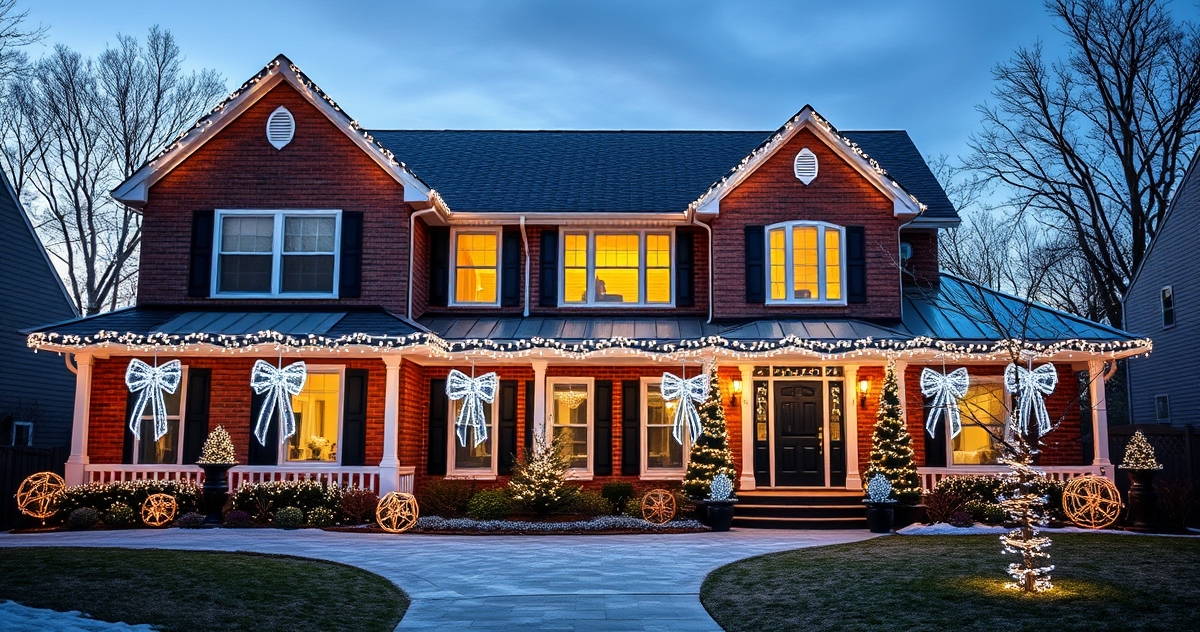
Garlands add lush, three-dimensional texture to porches, columns, railings, and fence lines. In Florida's climate, high-quality artificial garlands with UV-resistant needles outperform natural garlands, which degrade quickly in subtropical humidity. Deciding in July whether you want plain garland, pre-lit garland, or garland accented with ribbon and bows gives your designer time to source the right product and quantity. Check out our garland styling guide from mantle to outdoor fence for inspiration.
Wreaths on front doors, garage doors, and shuttered windows complete the layered look. Standard sizing for a single-car garage door runs 36 to 48 inches; double garage doors look best with 48 to 60-inch wreaths. Pair wreath selection with bow choices — our bow selection guide for holiday displays covers color coordination, bow size, and attachment methods in detail.
Landscaping Integration
Florida's year-round greenery is a major asset. Mature live oaks, sabal palms, clusia hedges, and bougainvillea all take lighting beautifully when wrapped or spotlit professionally. Decide in July which trees and shrubs you want included in the display. See our guide on bush and shrub lighting for Florida landscaping and our professional technique breakdown on how to wrap trees with lights to understand what is involved before your walkthrough.
How the Early-Booking Process Works
Booking in July does not mean work starts in July. Here is what the timeline actually looks like when you lock in early.
- July – Book and Deposit: Secure your spot on the schedule with a signed agreement and deposit. Your preferred install date is held.
- August – September — Design Consultation: A lighting specialist visits your property for measurements, photography, and a design discussion. You receive a detailed design proposal including product specifications, light colors, and layout.
- October — Revisions and Finalization: Any design tweaks are finalized. Product is ordered and staged. You receive a confirmed install date confirmation.
- Late October – Mid November — Installation: Your crew arrives on your scheduled date with everything pre-planned and pre-kitted. Installation is efficient, organized, and fully supervised.
- January — Removal and Storage: Schedule your removal and storage service as part of your original agreement, with a date that fits your post-holiday timeline.
The difference between this experience and calling in mid-October is dramatic. Early bookers describe install day as almost effortless — crews arrive, execute the plan, and leave. Late bookers describe install day as rushed, with on-the-spot decisions being made about product substitutions and design changes. The quality difference shows in the final display.
Florida-Specific Considerations Worth Planning Around
Florida is not a monolithic market. Your location within the state shapes what your display looks like and what installation logistics involve.
In South Florida — Miami-Dade, Broward, and Palm Beach counties — many homes feature Mediterranean Revival or modern architectural styles with flat or low-slope rooflines, tile fascia, and mature tropical landscaping. C9 displays on these homes often follow horizontal parapet runs rather than traditional peaked rooflines, and palm tree lighting is a major design element. In Central Florida — Orange, Seminole, and Polk counties — master-planned communities with traditional-style homes are the norm, and competitive neighborhood displays create strong demand for full-coverage roofline, tree, and shrub packages. In North Florida and the Panhandle — Jacksonville, Tallahassee, and Pensacola — homes tend toward more traditional Southern architecture with covered front porches that are perfect for garland and wreath-heavy presentations.
Whatever your region, our local guide to Florida's spectacular holiday light neighborhoods will give you a feel for the caliber of displays your neighbors are putting up — useful context before your own design consultation. For commercial property owners weighing the ROI of a professional holiday display, our post on commercial holiday lighting driving foot traffic year-round is required reading.
Frequently Asked Questions
Why should I book holiday lighting in July when installation is months away?
Florida's comfortable outdoor installation window runs only five to six weeks — from late October through mid-November — and demand from residential, commercial, and municipal clients fills that window fast. Booking in July guarantees your preferred install date, locks in current-year pricing, and gives you access to unhurried design consultations that result in a better-looking, more cohesive display. Waiting until fall typically means choosing from leftover dates and rushed planning.
What products should I prioritize selecting before my design consultation?
Start with three decisions: your roofline light product (C9 bulbs are the most popular choice for Florida homes due to their street-visible scale), your primary color temperature (warm white for a classic elegant look, multicolor for a festive traditional feel), and whether you want garlands, wreaths, or both as accent elements on porches, columns, and entry doors. Having these preferences established before your consultation makes the design process faster and the outcome more precise.
Does booking early actually lock in my pricing, or can it change?
When you sign an agreement and place a deposit in July, your quoted price is contractually established. You are protected from any rate increases that may apply to new bookings made closer to the season. This is a genuine financial benefit — not a marketing gimmick — and it is one of the most concrete reasons experienced homeowners book as early as possible.
What happens if a hurricane or storm disrupts my scheduled install date?
Early-booked clients receive priority rescheduling in the event of a weather disruption. Because your slot is already committed on the schedule, crews work to accommodate you first as the calendar reopens. Homeowners who book late and experience a weather disruption often find there is no available makeup date before their desired display deadline.
Can I book holiday lighting for a commercial property in July as well?
Absolutely — commercial properties benefit even more from early booking because their displays are typically larger, require more complex planning, and involve coordination with facility managers or property management teams. July booking gives commercial clients time for thorough site assessments, permitting checks where required, and phased installation planning. Visit our commercial lighting services page to learn more about what a professional commercial installation involves.
What does the removal and storage service include?
Removal and storage means a professional crew returns in January (or at your scheduled date) to carefully take down all installed lighting, garlands, wreaths, and accessories. Product is inspected, cleaned, properly coiled, and stored in labeled, climate-appropriate containers. When next season arrives, your inventory is ready to go — no tangles, no damaged strands, no hunting through the garage. It is the logical extension of a full-service lighting experience, and it can be added to your agreement at booking time.
Ready to get your 2024 holiday lighting on the books before the calendar fills? Contact us today for a free estimate — our July availability is open now, and the homeowners who book this month consistently tell us it is the best holiday season decision they make all year.