Key Takeaways
- Florida holiday lighting installers book out significantly faster than northern states because crews stay busy with year-round events, leaving far fewer autumn slots available.
- Labor Day weekend gives homeowners three uninterrupted days to compare designs, measure their property, and request quotes without weekday distractions.
- September bookings consistently unlock the widest scheduling windows — and sometimes early-bird pricing on full installations including C9 rooflines, garlands, and wreaths.
- Knowing your roof type, tree count, and approximate linear footage before your consultation speeds up the quoting process dramatically.
- Warm white and multicolor C9 displays are the most-requested looks in Florida; locking in your design early ensures product availability before national demand peaks.
Picture this: it is the Tuesday after Labor Day, and your neighbor's inbox is already full of replies from every reputable lighting company in Broward, Pinellas, and Orange County — while yours is still waiting. That scenario plays out across Florida every single year, and the gap between people who booked over the long weekend and people who waited until October is not measured in days. It is measured in availability, design flexibility, and sometimes dollars. Florida's warm climate creates a paradox that surprises most homeowners: the state that never truly goes dark between seasons is also the state where skilled holiday lighting crews disappear from the calendar faster than almost anywhere in the country. Here is everything you need to know about making Labor Day weekend work for you.
Why Florida Installers Book Out Faster Than You Expect
Florida's professional lighting crews are busy every month of the year — not just November and December. That single fact reshapes the entire holiday lighting calendar in ways that catch transplants from northern states completely off guard.
Year-Round Event Demand Leaves Fewer Holiday Slots
In Minnesota or Ohio, a lighting crew might have a genuine off-season that resets their capacity every spring. In Florida, those same technicians are wrapping palms for corporate grand openings in January, installing outdoor lighting for summer weddings in June, and stringing red, white, and blue displays for Fourth of July celebrations before they ever think about Thanksgiving rooflines. By the time September arrives, the crews that specialize in residential and commercial holiday work may have only 30 to 40 prime installation dates remaining before December 1 — and those dates serve an entire metro area.
According to industry patterns tracked by professional installation companies across the Sunbelt, Florida markets see roughly 60% of their holiday installation slots claimed before October 1. Compare that to northern markets, where October bookings are still considered early. If you have been reading our guide to early-bird holiday lighting packages, you already know that August is technically the earliest window. Labor Day weekend sits just inside that early-bird zone while also giving most families a realistic three-day stretch to actually sit down and think through their display.
The Compression Effect of a Shorter Installation Season
Even though Florida weather is mild, homeowners still want their lights up by Thanksgiving weekend — the same target as everywhere else in the country. That means installers are compressing an enormous volume of work into roughly eight to ten weeks (mid-October through late November). A single residential crew can complete four to six installations per day on straightforward properties, but complex rooflines, tall queen palms, and commercial facades take full days. Demand does not spread evenly; it spikes hard in early November. Booking in September is the simplest way to land outside that spike entirely.
What Makes Labor Day Weekend the Ideal Booking Window
Labor Day weekend works because it aligns free time, mental headspace, and seasonal timing in a way that no other summer holiday quite matches.
Three Days to Browse, Measure, and Decide
Most homeowners do not book holiday lighting on a random Tuesday night. They do it when they have space to look through photo galleries, walk the perimeter of their house, count trees, and talk with their spouse or partner. Labor Day provides that space. Schools are back in session the following week, fall routines are resuming, and there is a natural psychological shift toward planning the final quarter of the year. That mental shift, combined with an actual long weekend, creates the perfect conditions for making a decision you will feel good about rather than a rushed October booking made under pressure.
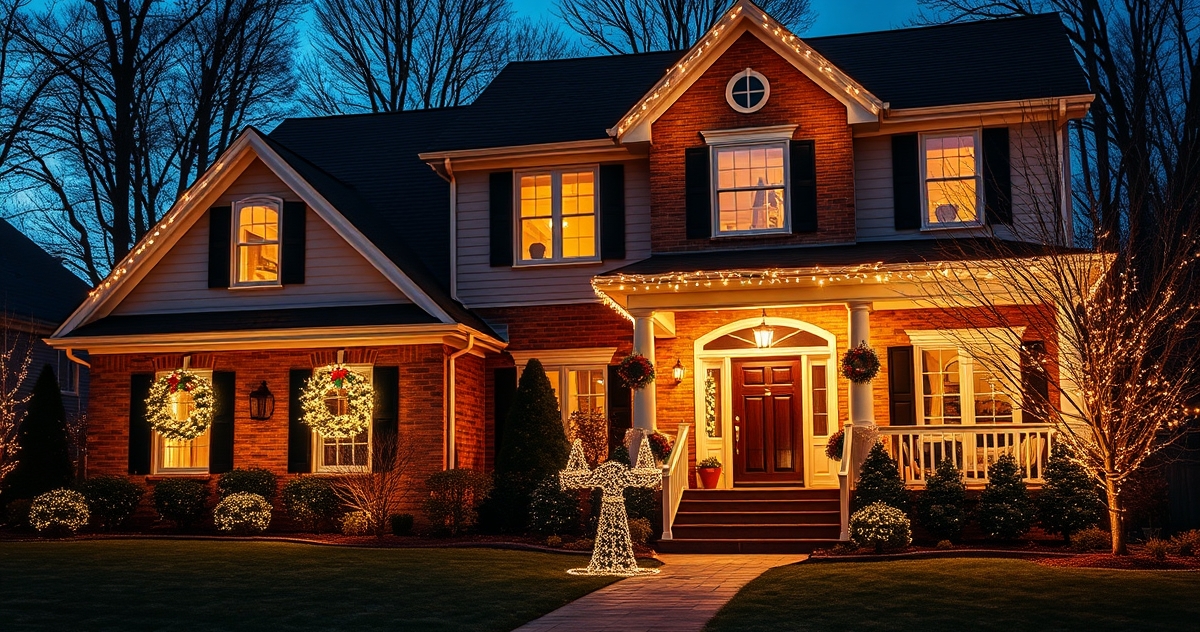
Use the weekend to browse design inspiration — warm white C9 rooflines paired with lush fresh-cut garlands draped along porch railings have become the dominant aesthetic across Florida's upscale neighborhoods, while multicolor C9 displays remain enormously popular for families with young children and for commercial properties trying to create maximum visual impact from the street. Knowing which direction you are leaning before your consultation saves everyone time.
Early September Quotes Are More Accurate and More Flexible
Quotes submitted in September have a meaningful advantage over October quotes: installers can still offer flexibility on scheduling dates, design adjustments, and occasionally pricing. Once the season compresses, crews are locked into tight schedules and have less room to accommodate last-minute design changes. A September consultation for a residential installation might include a same-week site visit, whereas an October request might mean a three-week wait just to get eyes on your property.
September Bookings: Scheduling Windows and Pricing Advantages
Booking in September does not just mean you get a spot on the calendar. It means you get to choose your spot — and in some cases, pay less for the privilege.
Preferred Installation Dates Are Still Available
Most Florida homeowners prefer installations in the first two weeks of November — early enough to enjoy the lights through Thanksgiving, late enough that the display does not feel premature. Those dates are the first to disappear. Homeowners who book in September routinely secure their preferred window. Those who wait until mid-October often end up with late-November slots that feel rushed, or early-October slots that feel too soon.
| Booking Month | Typical Scheduling Flexibility | Design Change Ease | Pricing Notes |
|---|---|---|---|
| August | Maximum — widest date range | Very easy | Early-bird discounts most common |
| Labor Day / Early September | Excellent — prime slots available | Easy | Some early-bird offers still active |
| October | Moderate — peak slots filling fast | Limited | Standard pricing, less flexibility |
| November | Low — emergency/waitlist only | Very limited | Rush fees may apply |
Product Availability: C9 Bulbs, Garlands, and Wreaths
This point gets overlooked until it is too late. Premium products — specifically commercial-grade C9 LED bulbs in warm white and multicolor, fresh-cut Fraser fir garlands, and oversized 36-inch commercial wreaths — are ordered months in advance by professional installers. When you book early, your installer can include your property's specific quantities in their bulk order, ensuring you get the exact product you want. C9 bulbs in particular come in dozens of specifications; the warm white 2700K and 3000K options are the fastest to sell out because they work beautifully against Florida's stucco exteriors and lush tropical landscaping. If you want garland draped along your fence line or entry columns, September is when your installer can still source the exact length you need without substitutions.
How to Prepare Before Your Consultation
A well-prepared homeowner gets a faster, more accurate quote and a smoother installation day. Spend part of your Labor Day weekend gathering four key pieces of information.
1. Know Your Roof Type and Pitch
Roof type directly affects both the installation method and the labor estimate. A flat roofline on a mid-century Florida ranch home is a different project than a steep hip roof on a two-story Mediterranean-style house. Tile roofs, which are common throughout South Florida and the Tampa Bay area, require specific clip types to avoid cracking. Metal roofs common in coastal construction need magnetic or adhesive clip systems. Our professional roofline lighting installation guide for Florida homes breaks down every roof type in detail — read it before your consultation so you can answer the installer's questions with confidence.
2. Count Your Trees and Shrubs
Walk your property and count every tree and shrub you might want lit. Include your palms — queen palms, Sabal palms, and Washington palms are all wrappable and look stunning with warm white mini lights spiraled up the trunk and fanned into the fronds. For a full walkthrough of how professionals approach Florida's tropical canopy, see our guide on wrapping palm and tropical trees with Christmas lights. Write down approximate heights for your tallest trees; installers need this to determine whether a bucket truck or lift will be necessary, which affects scheduling and cost.
3. Estimate Your Linear Footage
Linear footage determines how much product is needed for rooflines, garlands, and fence runs. You do not need to be precise — a reasonable estimate is enough for an initial quote. Walk the perimeter of your roofline with a measuring wheel or use Google Maps' measurement tool to get a rough number. A typical Florida single-family home might have 150 to 250 linear feet of roofline; larger estate properties can exceed 500 linear feet. Knowing you have approximately 180 feet of roofline tells your installer they are likely looking at 360 to 540 C9 bulbs spaced at 12-inch intervals — a very different scope than a 90-foot cottage roofline.
4. Think About Color Palette and Style
Decide whether you are going warm white, multicolor, or a blend before your consultation. Warm white creates an elegant, timeless look that photographs beautifully and complements Florida's coastal and Mediterranean architecture. Multicolor — especially with large-format C9 bulbs — delivers a nostalgic, festive energy that makes properties visible from two blocks away and photographs brilliantly for neighborhood events and social sharing. Review our guide on warm white versus cool white light color temperatures if you are on the fence. Also consider whether you want a permanent lighting system that can transition from holiday displays to year-round architectural accent lighting — a growing trend in Florida that eliminates the annual installation altogether.
Municipal and Commercial Properties: Book Even Earlier
If you manage a shopping center, HOA common area, hotel, or municipal property, the Labor Day window is not early — it is borderline late. Large-scale commercial and municipal holiday lighting installations involve permitting, lift equipment scheduling, and product orders that can take four to six weeks to process. Many Florida municipalities that host annual holiday lighting ceremonies (think waterfront parks, downtown shopping districts, and resort corridors) lock in their installation partners by August. If you are a property manager or city coordinator reading this after Labor Day weekend, contact us immediately rather than waiting further.
For storefront and retail managers, our commercial holiday lighting planning guide for Florida storefronts walks through the full timeline from concept to installation. Exterior displays that drive measurable foot traffic — which we cover in depth at how commercial holiday lighting drives foot traffic year-round — require lead time to design effectively.
After the Season: Storage and Removal Planning
Booking your installation also means booking your removal and storage service at the same time. Florida's storage conditions are not forgiving to improperly packed lighting equipment — heat and humidity degrade C9 bulb sockets, tangle mini light strands, and flatten garland if stored without proper ventilation. Professional removal and storage ensures your investment lasts five to ten seasons rather than one. Ask about this during your Labor Day consultation so it is baked into your agreement from the start rather than an afterthought in January when crews are already stretched thin.
Frequently Asked Questions
Why do Florida holiday lighting installers book up faster than in other states?
Florida installers stay busy with year-round events — corporate openings, weddings, Fourth of July displays, and seasonal commercial work — so they never have a true off-season to rebuild capacity. By Labor Day, many crews have already committed a significant portion of their autumn calendar to early bookings, leaving fewer premium slots for late-planning homeowners compared to installers in colder northern states who have a genuine winter downtime.
Is Labor Day too early to think about Christmas lights in Florida?
Not at all — it is actually one of the best windows to act. Most Florida homeowners want installations completed by the first or second week of November, which means crews are working flat-out from mid-October onward. Booking over Labor Day weekend puts you ahead of that crunch and gives you access to preferred installation dates, full product selection (including warm white and multicolor C9 bulbs), and occasionally early-bird pricing that expires in September.
What information should I have ready before calling for a holiday lighting quote?
Come prepared with four pieces of information: your roof type (tile, shingle, metal, or flat), the number and approximate height of trees and shrubs you want decorated, the estimated linear footage of your roofline and any fence or railing runs you want to outline, and your preferred color palette (warm white, multicolor, or a combination). This information allows an installer to provide a much more accurate quote in the first conversation rather than requiring multiple follow-ups before a site visit.
Do September bookings actually come with lower prices?
Sometimes, yes — but that is not the primary reason to book early. Some Florida lighting companies extend early-bird pricing through early September as a continuation of August promotions. More reliably, September bookings give you scheduling leverage that has real dollar value: you avoid rush fees that can appear in November, you have time to compare multiple quotes without pressure, and your installer can source exact products in your preferred specifications rather than substituting what is left in inventory.
Can I book holiday lighting for a commercial property over Labor Day weekend?
Yes, and for commercial properties you should book as early as possible — ideally before Labor Day rather than during it. Large commercial installations involving rooflines, tree-wrapping, garland installation across storefronts, and interior window displays require permitting, equipment scheduling, and bulk product orders that take weeks to process. Contact a professional installer immediately after the holiday weekend if you have not already secured your spot for the season.
What happens if I miss the Labor Day booking window?
You can still book in October, but your options narrow considerably. Prime installation dates in early-to-mid November fill up first. You may also find that specific products — particular C9 bulb styles, fresh garland lengths, or large custom wreaths — are no longer available in your preferred specifications. If you find yourself in that position, contact us as soon as possible rather than waiting longer; a spot on the waitlist is always better than no spot at all.
The bottom line is straightforward: Labor Day weekend is Florida's unofficial start of the holiday planning season for a reason. The long weekend, the end-of-summer mindset, and the calendar reality of limited installer slots all point toward the same action. Request your free holiday lighting estimate today and lock in the design, date, and products that make your home or business the one neighbors remember all season long.